
Ever wonder how CFI crews prepare for each summer’s work? After completing a week of classroom-based training, coupled by another week of preparation out in the field, the new crew is poised to begin another successful season. Here’s a brief rundown of some of the activities that helped us get ready during last week’s field training session.
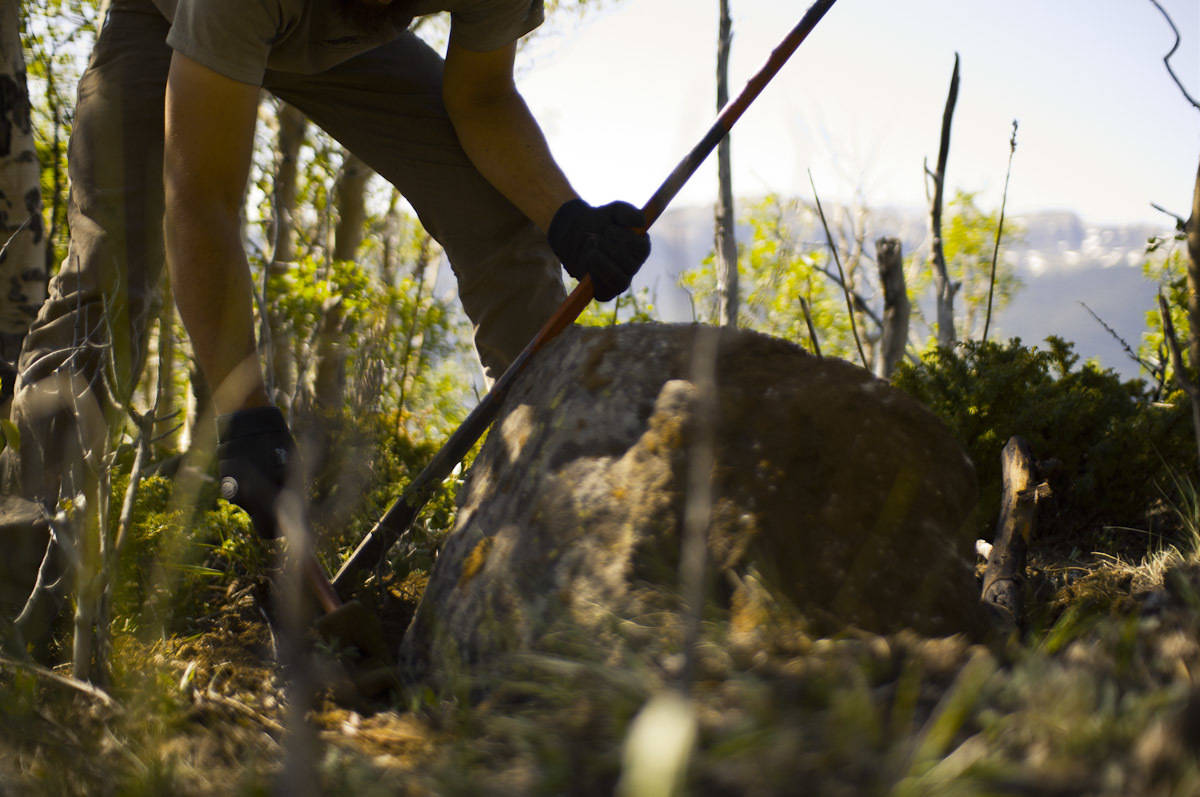
Ben maneuvers a rock on the trail
There’s nothing like hiking up a mountain, strapped down with packs and tools to do some dirty, hands-on work. That’s exactly what our field training on Elbert consisted of. We focused on restoring and repairing sections of the Mt. Elbert trail. The south trail is experiencing some major braiding (when hikers create new paths off the main trail) as well as erosion. To counter the braiding, we planted plugs of native grasses in the braids. Then, we set some scary-looking rocks and debris in the braids to deter folks from straying off the main trail. I personally have not had much experience with re-vegetation trail work so it was a new and exciting skill to learn, and I can now say that the plugs are well worth it. They not only deter people from walking off trail (who would dare step on a pretty plant?) but once their root systems redevelop, they should assist in erosion prevention.
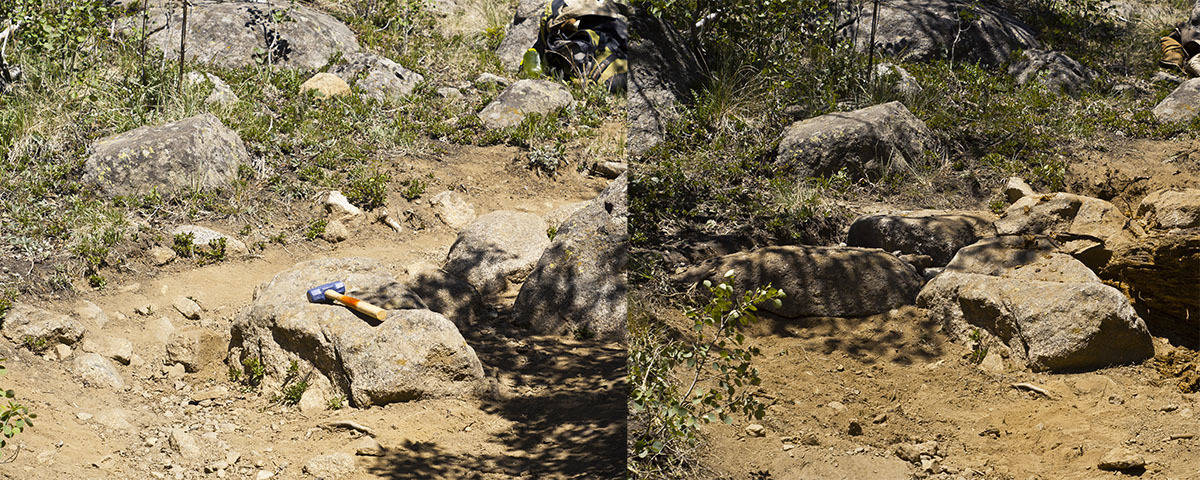
Before: Braid trail; After: Newly re-vegated section
Erosion? Who said that? Yes, erosion. The trail at Mt. Elbert is heavily eroded. The trail needs a massive amount of work so that our kids and future generations of hikers can climb it – rock work in particular. Rock-work means building check steps, retaining walls, and staircases, that (if built properly) can last decades.
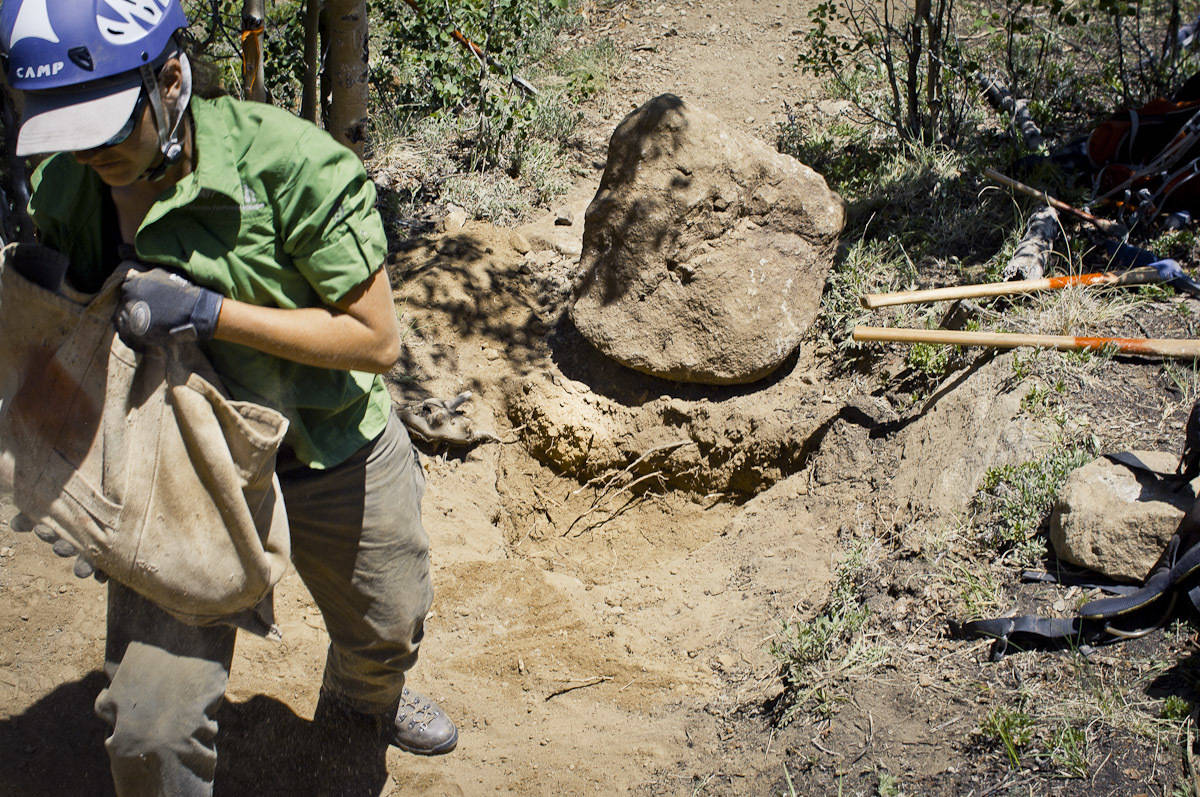
New check step on Mt. Elbert trail
At the training this past week, many check steps were put it in to quell the erosion on Mt. Elbert. A check step is essentially a massive object, usually a rock or piece of timber set into the trail that will “check,” or slow water, as it flows down the mountain. The water brings sediment down with it, which the step will collect, slowly filling in eroded parts of the trail.
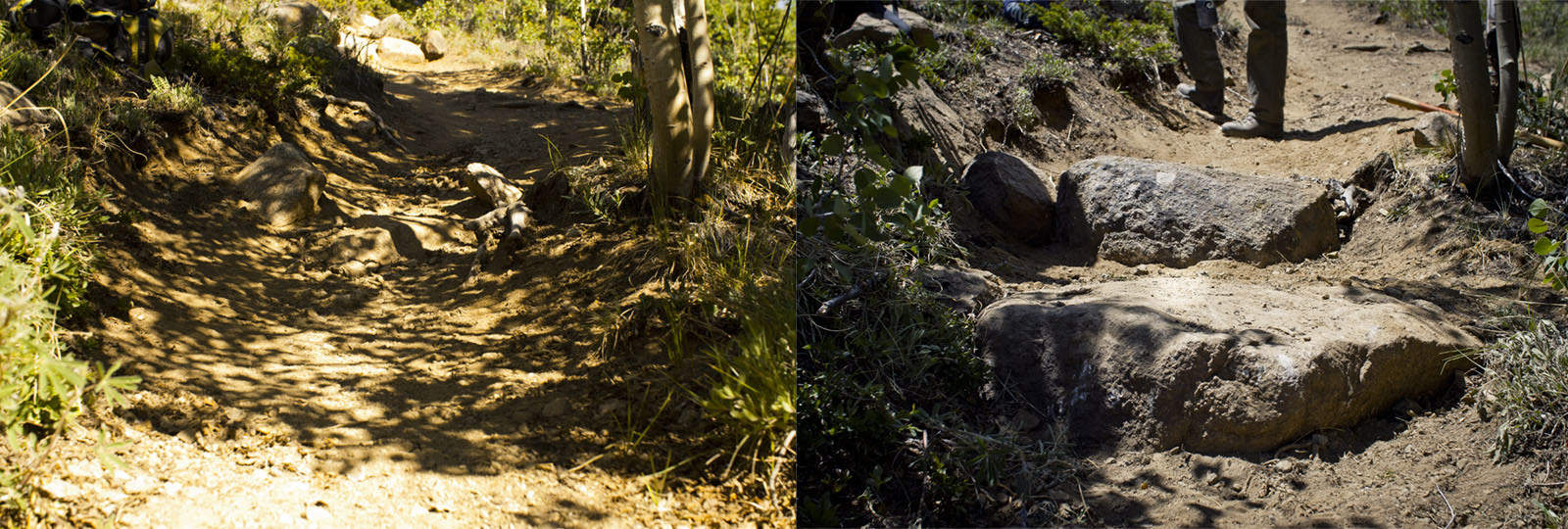
Before: Heavily eroded trail; After: Newly completed check step
To identify a check step on your next hike, look for a large rock (or timber) in the trail with a good stepping surface that causes you to take a step up. This rock will generally being bordered by “gargoyles.” These big ugly rocks on either side lock the check step into place and encourage hikers to stay on trail. Don’t forget to look for sediment built up on the uphill side of the step. If you see a check step, someone is caring for the trail you enjoy.